
The scientific temper is a rational approach to the discovery of truth through free and creative thinking with humility, not arrogance.
In highlighting the essence of Scientific temper, B.K. Pattnaik quotes A. R. Desai
Indian people had done pioneering work in sciences such as mathematics, chemistry, metallurgy, and medicine, centuries before most of the modern people of the world ever awoke to civilized life. But thereafter, Indian society stagnated at the same economic, cultural level for a long time almost till the close of Mughal period and Indian people did not progress appreciably.
– A. R. Desai (Ph. D., Department of Sociology, University of BombayHe further mentions that during this period, the Upanishadas did not accomplish any striking thing in the sphere of natural science and technology.
I often feel the absence of individuals in our society who once inspired people to seek knowledge and encouraged a scientific way of thinking rooted in humility. The technology of our present time promotes rationality on one hand, but on the other hand it spreads pseudoscience faster than ever before. More importantly, the element of humility seems to be missing across many platforms.
I am living in a world where powerful tech figures and so-called leaders have their names in the Epstein files, associated with wrongdoing, even allegations of child trafficking. Yet instead of holding them accountable, we retreat into the corners of our rooms, hiding our spineless bodies from the world.
Nowadays, it is getting even worse. People have lost their sense of proportion to such an extent that they chest-thump over these spineless, immoral actions. I have little doubt that if some of these same people were in similar positions, they would have committed the same wrongdoings. They seem to have lost their conscience.
We have normalized the collapse of bridges, polluted air, contaminated water, corruption, murders, and accidents caused by institutional negligence – deaths born of unaccountability.
What are we actually triggered by? Rationalists, educators, critics, and independent journalists who dare to ask questions. Our standards have fallen so low that entire generations can’t even question those in power even about basic necessities.
So what do we do? In our pretentious coolness and quiet impotence, we take comfort in privileged positions within a patriarchal society. We mock Gen Z for showing emotions in a movie theater. We objectify women as though it is a sign of humor. We mock leaders who have the ability to listen and who remain calm and composed. With little knowledge and no real effort to understand complex issues or seek the ground truth, we settle for the temporary pleasure of ridicule.
Humans are naturally drawn to strong emotions – drama, conflict, charisma. Calm leadership does not trigger that response, so we perceive it as boring or uninteresting. Our cognitive bias leads us to overestimate visible action and underestimate invisible maintenance. Yet maintenance leadership is precisely what prevents problems – and it looks boring because nothing explodes.
Think of it like this: You don’t want your airplane pilot to be entertaining.
You want them to land the plane safely.
Safe landings are boring. That’s good.
In a humanitarian country, where people are kind to one another, compassion and empathy would form the nucleus rather than jingoism in the name of nationalism. We would respect scholars and innovators and stand united for collective progress. We would not silence our critics behind the illusion of development.
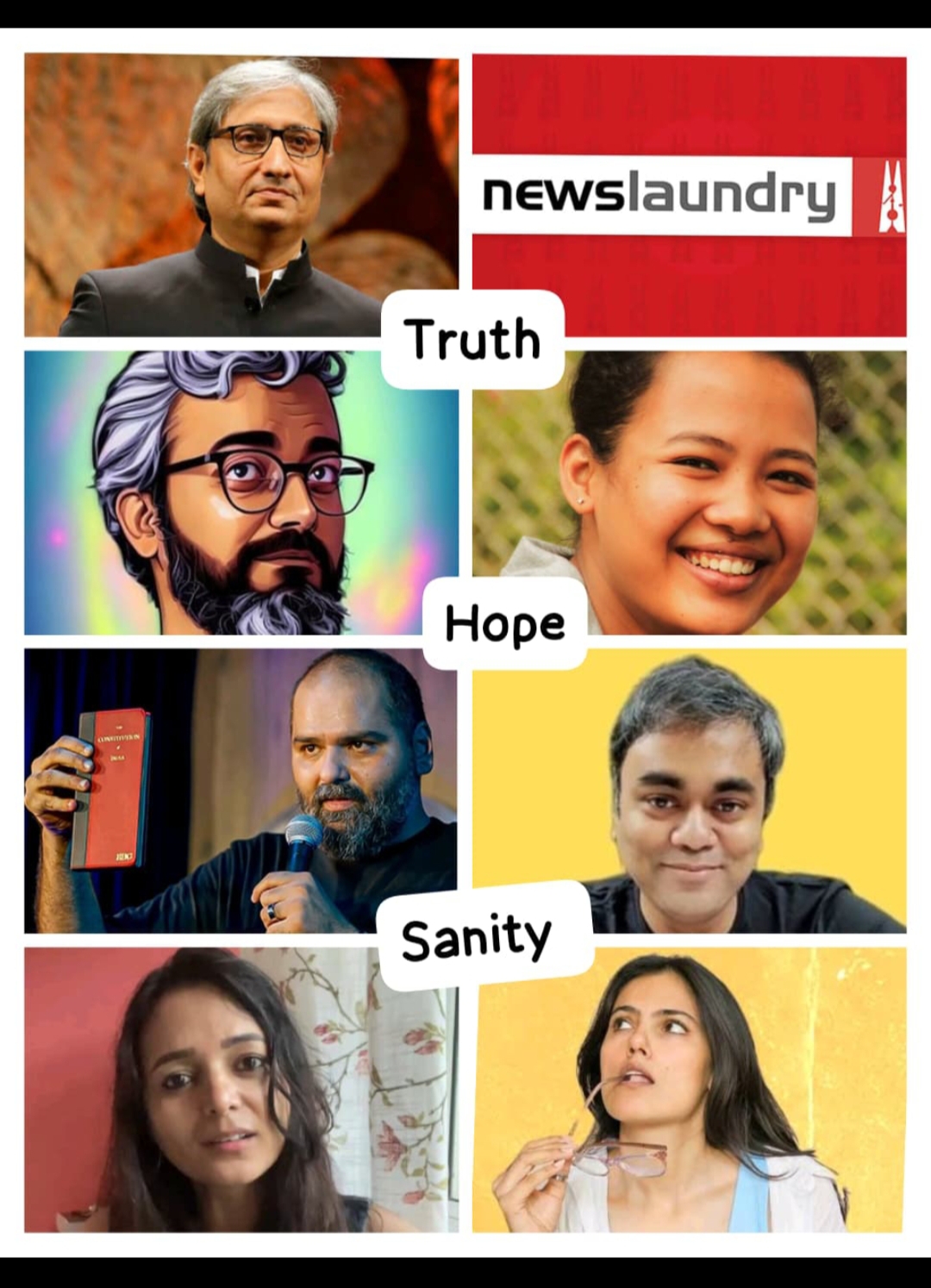
In this time of despair, I have found a few scholars and public voices of our time who have become rays of hope for me – like the last hope left in Pandora’s box:
- Nope/ – Kunal Kamra,
- Jan hit me Jaari – Kunal Kamra,
- Ground reports by Newlaundry, Scroll, The Reporter’s Collective
- News & Analysis by Ravish Kumar, Akash Banerjee
- Discussions on economics, politics, religion, and rationality – Vimoh, Meghnerd
- Conversations on empathy and politics – Dr. Medusa, Qabiran, Sheeba
- Satyamev Jayate by Amir khan
In a truly progressive nation, such intellectuals would be honored and appreciated for their voluntary service to the country. Unfortunately, it often feels as though India is moving backward at full tilt in terms of rationality. We have reached a stage where suppressing these intellectual voices has become a priority, simply because they question the feudalistic mindset embedded in society.
Our regressive India seems busy promoting “Baba culture,” toxic nationalism, and derogatory language. In recent times, the language of public communication has become increasingly coarse in almost every form. I am not referring to Gen Z slang – that is part of cultural evolution, not abusive culture. I am concerned about the outburst of profanity that has entered everyday conversation.
We once used respectful pronouns and language for our leaders and change-makers. Today, it has become easier to judge the heroes of India’s freedom struggle without understanding the dynamics and constraints of their time. I see middle-aged men, who have spent most of their lives focused on survival and routine, harshly abusing M. K. Gandhi and Nehru, presenting their opinions as unquestionable facts and loudly imposing their viewpoints. Why? Many of them have effectively become propaganda activists, “graduates” of WhatsApp University, with deeply compromised critical thinking. Raised in authoritarian households, instead of choosing rational reflection and course correction, they often continue the toxic practice they were taught in their traumatic childhood.
While traveling on public transport, when I hear abusive words used casually in normal conversations, I wonder how we are becoming desensitized – and how we are passing this same culture to the next generation. The normalization of abusive language, especially language targeting women, has become deeply intertwined with patriarchal and caste-based attitudes. Every day, we seem to find new excuses to avoid behaving like responsible human beings.
An abuser’s insecure sense of self often makes them uncomfortable confronting present flaws or taking meaningful action. Instead, they rely on various logical fallacies to justify moral ambiguity. In the process, our language has lost its touch of compassion. Once, in our civility, we sought to learn from and admire our scientists, social reformers, and literary figures. That spirit now feels diminished.
At times, I feel there is no hope ahead. I feel deeply disturbed seeing the world behave as if genocide is normal, as if large-scale child trafficking is normal, as if the enslavement of people for capitalist gain is normal. It feels dystopian – as though we are already living in one. Friedrich Nietzsche’s nihilism feels uncomfortably real.
In feeling this tension between despair and integrity every day, I console myself by thinking that there are others like me – people who are still holding on to hope, sanity, truth, and love, even as those values seem to be diminishing. I hope we all survive, and that there is light at the end of this long, dark tunnel.

I am not sure whether this will ever end, or whether this is simply the way things are. However it unfolds, I would like to express my sincere gratitude to the scholars, thinkers, rationalists, and empathetic individuals of our time who help keep my sanity intact.
Thanks to These Scholars and Guiding Lights Amid All the Noise and Nonsense
My Last Hope in Pandora’s Box


 Avinamaurya