
Another suicide, an institute had protested. The director resigned. This has reached to this point.
We have been on the road of being a developing nation for eons, and by now, we should have been solving problems like these. At a larger level, this feels like a political death. A death by capitalism.
Every suicide is, in some sense, an attempt to escape the pain a person is suffering in real life. But who caused that pain? When a system driven by greed keeps extracting more and more from the common person, what happens when that person feels there is no space left to breathe, no security left to hold on to, and no choice left except to end their own life?
I wonder how students on campus must be feeling and dealing with these.
Capitalism can make life so miserable that despite having plenty of resources, survival itself becomes a fight every single day. And eventually, we get tired of fighting. We can address human emotions. We can investigate what went wrong. We can plan corrective actions. And then the same story repeats. So we take corrective action again. But no amount of corrective action is going to permanently fix the problem if we keep fixing only the symptoms.
We don’t seem to understand that within a campus, we are often fixing a smaller negative feedback loop. Something goes wrong, we identify the error, take corrective action, and the immediate error appears to reduce. It feels like progress. But we forget that there is a much larger feedback loop outside the campus that is continuously generating the error in the first place. That larger loop isn’t correcting the course. It is amplifying the problem.
And we are not fixing that.
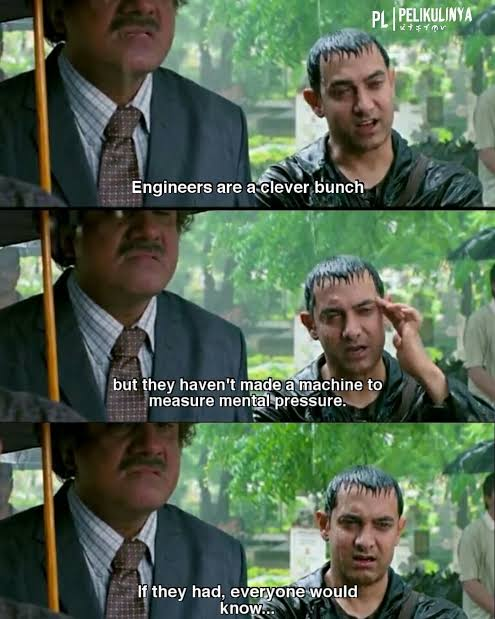
No one will ever reach the point of attempting suicide if they feel genuinely secure in society. No moment of life should feel terrifying. Yet we have created a competitive world where every moment feels like an attempt to prove yourself. Every rejection feels like death. Losing one exam can feel as if your entire life is falling apart. We tend to value exam more than what it is.
Why?
Students are not simply learning and enjoying the process anymore. They are living inside a pressure cooker. And this brings me to something else I keep thinking about: why would a student go to ChatGPT or some other AI for help even if their doubts and questions could be answered just as easily by another human being? or really?
We feel more connected to humans, yet we increasingly prefer hours of YouTube lectures and AI because there is a certain security in knowing that nobody is judging us. From puberty and sex to rocket science, why can’t human beings help each other develop as human beings? Why do we have to depend on the Internet to teach us so many basic things about life?
Are we really incapable of helping one another? I don’t think so. I think we have lived in a society shaped by hierarchy and insensitivity for so long that being judgmental has become normal. From marks and ranks to wealth, language, appearance, and social background, we constantly evaluate and classify one another. We judge before we understand, compare before we empathize, and label before we listen.
Every judgmental look, every dismissive comment, every moment when a student feels stupid for asking something “basic” adds another layer to the barrier between peers, between teachers and students, and ultimately between the individual and society. I don’t understand the attitude of an individual who gained a complex knowledge hard way expecting others to do the same, rather helping others to access and understand it better way, easier way, simpler way. It is like passing the trauma / PTSD to next generation.
We expect students to know a gazillion things before they are even allowed into the classroom. We expect them to crack JEE, NEET, and countless other examinations just to become eligible to sit in a class. The assumption is that this ensures students have all the necessary prerequisites. But does it really? I think this assumption doesn’t account for how those prerequisites were acquired. One student may have been privileged enough to learn everything gradually during school. Another may have learned difficult theoretical concepts independently. Another may simply have memorized enough of the material to make sense of the next chapter, few may be like me (who suffers from OCD – can’t just digest the topic unless the underlying concept is visually clear). There are an infinite number of such situations. And then comes the bombardment of knowledge in the classroom.
A student who is ready to learn may actually love that bombardment. It can be exciting.
But then there comes a point where one thing doesn’t make sense. That one missing piece creates a gap, and because the next topic depends on it, suddenly nothing feels enjoyable anymore, since we missed a link. That creates misery.
This isn’t necessarily because the student doesn’t want to learn. They could learn it themselves. But their past experiences with learning may have been so disappointing and frightening that they start feeling afraid even before opening the book. Why were those past experiences so frightening? Think about our school days. Did we really enjoy going to school? Maybe we did on the special days—the days when we got sweets, played games, or something different happened. For few of us, school was ultimately about passing examinations and scoring well, but many of us it was getting scolded for plenty of things.
Why?
Because our past generation were told that good marks would lead to a good college, a good job, a good career, and eventually a prosperous family and life. How true is that promise anymore? No matter how hard you struggle, no matter how well you score, what probability is there that you will actually be “successful”? And what does “successful” even mean? To become a cog in a corporate race, constantly competing just to afford the cost of living?
Who ultimately benefits from all this kind of suffering and ending in slavery?
All this schooling, all these scholarships, all these accomplishments, for what? To become a corporate slave. And somehow, we are expected to look at that as if it were a great achievement. That’s the dystopia I see in Hegel.
To err is Human.
To create err for your own greed is what?
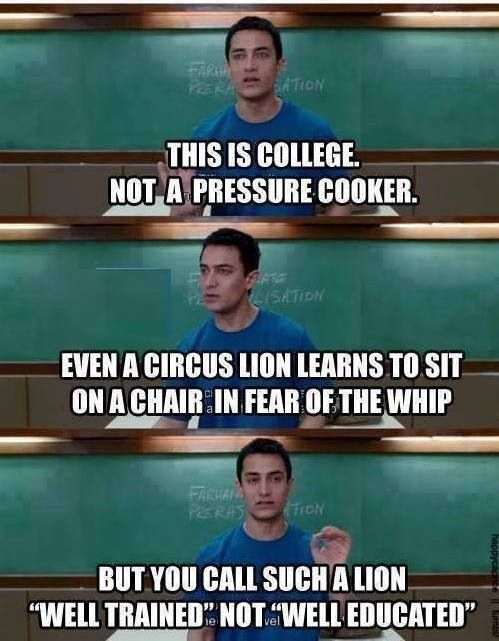
Science and engineering were born from the creative thinking of scholars, who questioned what already existed, imagined what did not, and tried to understand the world in their own way. But somewhere along the way, science and engineering became increasingly reduced to theoretical study and for profit model: learn what is already known, reproduce it, solve the expected problems, and earn more.
The canvas was never completely blank. It wasn’t blank then, and it isn’t blank now. But there was enough space on that canvas to bring your own creativity to it – to ask your own questions, explore your own ideas, and leave something of yourself behind. Today, I often feel that space is disappearing. The canvas is still there. The knowledge is still there. The tools are better than ever. Perhaps what we need to do is reclaim that space.
Maybe education doesn’t have to be about filling the canvas with what has already been painted. Maybe it can once again be about giving students the courage, freedom, and time to pick up the brush themselves. There is still so much we don’t know. And perhaps that is exactly where the space for our creativity begins.
Academic research has given humanity countless conveniences and helped businesses prosper. Perhaps it is time to invest that same intellectual energy in human happiness.


